
The Biology


A Guided Journey Through the Biology
Scientists know the immune system is central to food allergy. What remains less clear is why it learns to treat a harmless food as dangerous, how other parts of the body influence that decision, why responses differ and what may help protection last.
Each stage looks at one part of the process. Together, they help FASI study food allergy as a connected biological problem rather than a collection of separate symptoms. The stages are a guide to the questions FASI studies and not a single pathway every person follows.
Food Allergy Stages
Explore five connected stages of food allergy biology, from how the body first encounters food to how allergic responses develop and what may help protection last.
Stage 1 | What the Body Encounters

What is the body sensing in food?
Food contains proteins and many other natural or added compounds. FASI studies which features the body detects and how those signals affect the gut, immune system and nervous system.
The answers may reveal why certain foods or exposures trigger an unwanted response and where that first signal might be interrupted.

Stage 1 | What the Body Encounters
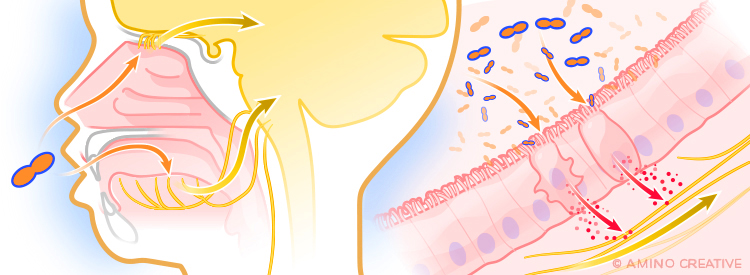
Which cells first recognize an allergen?
FASI studies the cells that detect food allergens and send some of the body’s first warning signals. Understanding these earliest steps may lead to better ways to identify risk or stop a reaction before it gathers force.

Stage 2 | Where Food Meets the Body
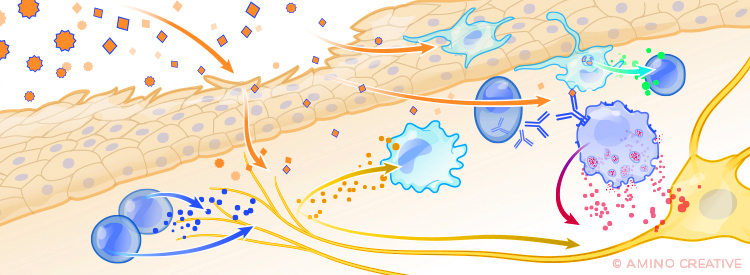
Can the skin help teach the body that a food is dangerous?
The skin is a barrier filled with immune cells and nerves. FASI studies how skin injury and communication between these cells may help the body first learn to react to a food.
This work may point toward prevention or ways to interrupt allergy before it becomes established.

Stage 2 | Where Food Meets the Body

Which cells meet food in the small intestine?
The small intestine is one of the first places food and food-related signals interact with the gut lining, immune cells, nerves and microbes. FASI investigators are mapping which cells are present, what signals they exchange and how the allergic gut differs from the gut of someone without food allergy.
A clearer map may support more precise tests and treatments.

Stage 2 | Where Food Meets the Body
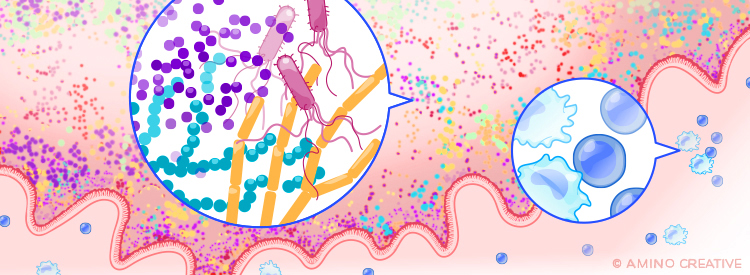
How do gut microbes shape the response to food?
The microbiome is the community of microbes that lives in and on the body. FASI studies which microbes may support tolerance, which may make allergy more likely and how these communities change in food allergy.
The answers may improve how the disease is measured and point toward new treatment approaches.

Stage 3 | How the Body Decides

Why does a protective system treat a harmless food as a threat?
FASI studies which immune cells, antibodies and signals drive an allergic response, how those messages pass from cell to cell and how the response is remembered.
Understanding these steps may reveal ways to predict reactions, calm harmful immune activity or change the course of food allergy.

Stage 3 | How the Body Decides

How do the gut, immune system and nervous system decide whether food is safe?
With every bite, cells lining the gut exchange information with immune cells and nerves. FASI studies how those messages may lead the body to accept a food or launch a defense.
This decision point may offer new ways to measure risk or intervene before a reaction escalates.
Stage 4 | How the Brain Shapes the Response
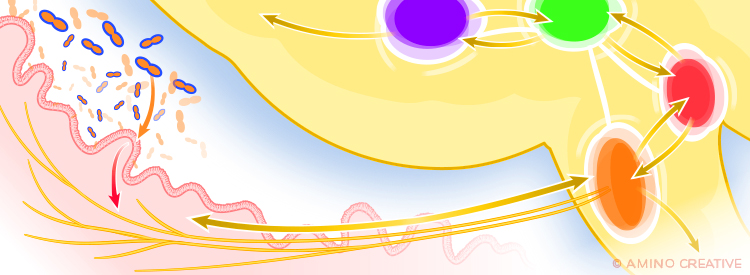
How does the brain turn an allergic signal into symptoms and behavior?
The central nervous system—the brain and spinal cord—helps coordinate responses such as food avoidance and vomiting.
In research models, FASI studies how brain circuits respond to allergic signals and how earlier experiences may shape later behavior. This work could point toward new ways to reduce harmful responses.

Stage 5 | What May Help Protection Last

How can the body move toward tolerance?
Tolerance means the body can encounter a food without launching a harmful allergic response. FASI studies how immune cells, nerves and tissues communicate as inflammation calms and the body returns to balance.
Researchers are studying which changes in antibodies, immune cells and other signals are associated with more durable protection.
The Opportunity Is in the Connections
FASI studies five areas that overlap throughout this journey: the body’s barriers; food and the microbiome; allergic inflammation; antibodies and immune cells; and communication between nerves and immunity.
No single area explains food allergy on its own. Studying the connections among them may reveal where the response begins, what makes it stronger and what could help protection last.